
The ReNativ Method
Restoration, in order.
The ReNativ Method is ReNativ Eco's six-step process for turning a conventional yard into habitat that feeds caterpillars, pollinators and birds. Each step depends on the one before it.
Step Zero
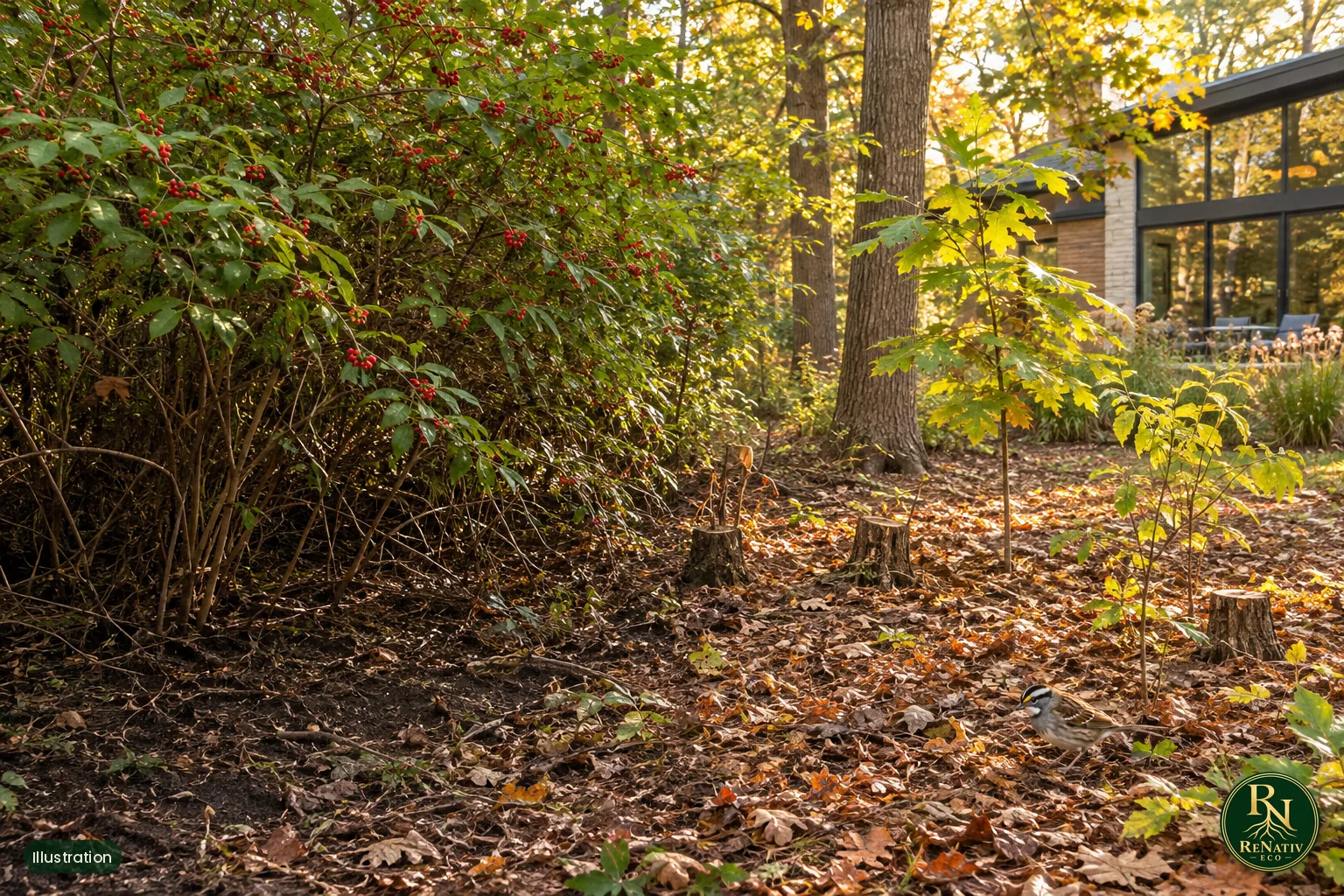
Remove invasives first
An invasive plant is a non-native species that spreads aggressively and displaces the native plants local wildlife depends on.
Before anything new goes in the ground, we clear what is crowding out the food web. Amur honeysuckle, burning bush, Japanese barberry and English ivy are common culprits, and many are still sold at big-box garden centers.
Removal comes before planting because a new native bed cannot outcompete an established invasive on its own.
Step 1
Diagnose the site
A site diagnosis is a structured read of the conditions that decide which plants will thrive in a specific yard.
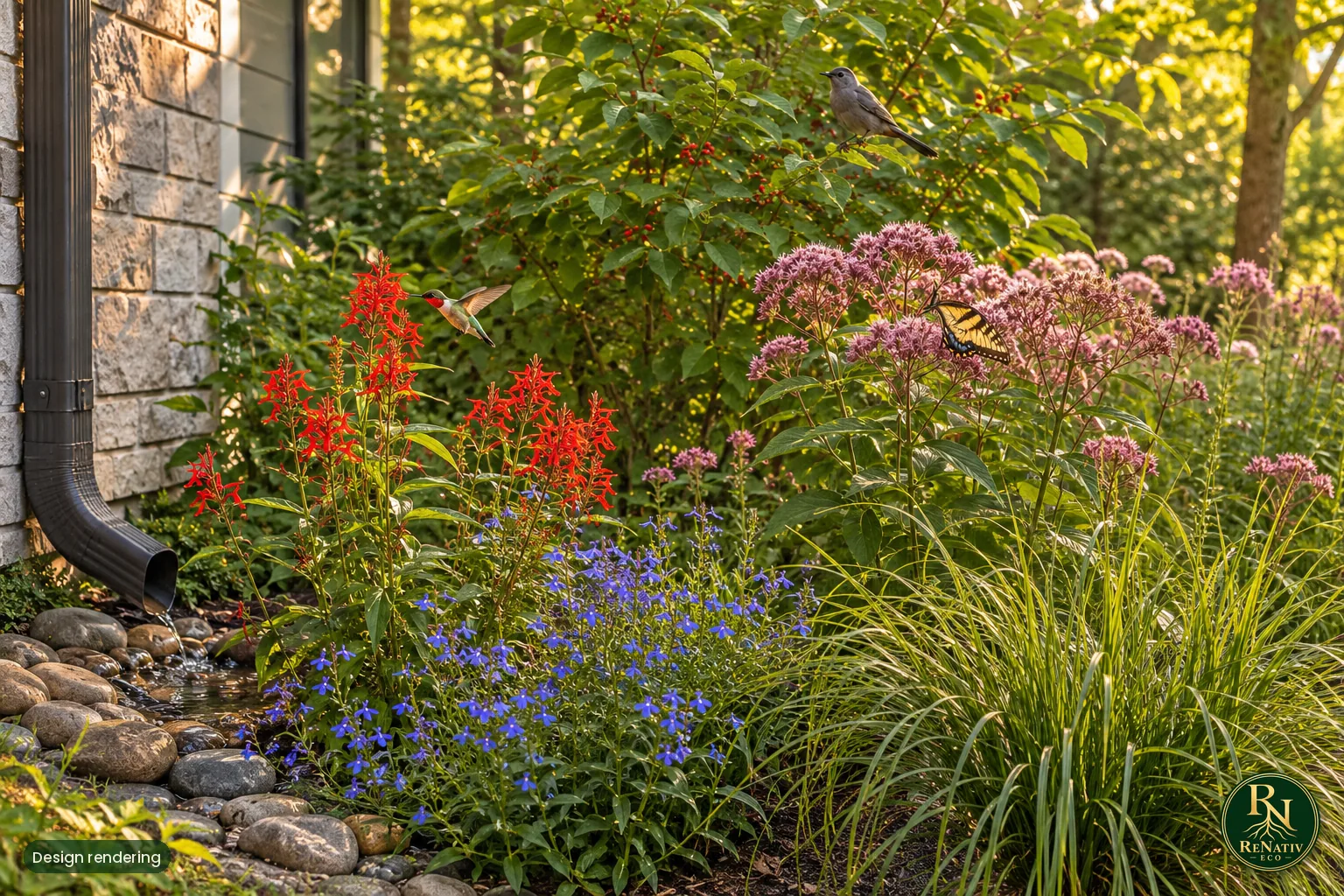
We look at sun and shade hours, soil texture and drainage, where water collects, deer pressure, whether the space is pet-aware, and whether black walnut (which releases juglone into the soil) is nearby.
Step 2
Prescribe keystone natives
A Prescription is a ReNativ Eco design that names the specific keystone native plants your ecoregion needs, placed where they will do the most good.
Keystone natives anchor the design because they carry most of the ecological weight — feeding the caterpillars that feed nesting birds.
Step 3
Support the keystones
A supporting native is a native plant chosen to extend bloom from spring to frost and to fill the design's height tiers.
Low plants hold the front edge, mid-height perennials and grasses carry the middle, and taller natives anchor the back — so the bed reads as intentional, layered and calm.
Step 4
Substitute with confidence
A substitution is a pre-vetted alternative that fills the same ecological and design role when a plant is unavailable at your local nursery.
Every plant in a Prescription comes with an alternative, so availability never stalls the project.
Step 5
Plant and let it mature
Maturation is the period when native roots establish before top growth fills in.
The first year is roots, the second is spread, and by year 3 the bed is full, blooming in sequence and busy with pollinators, caterpillars and birds.